


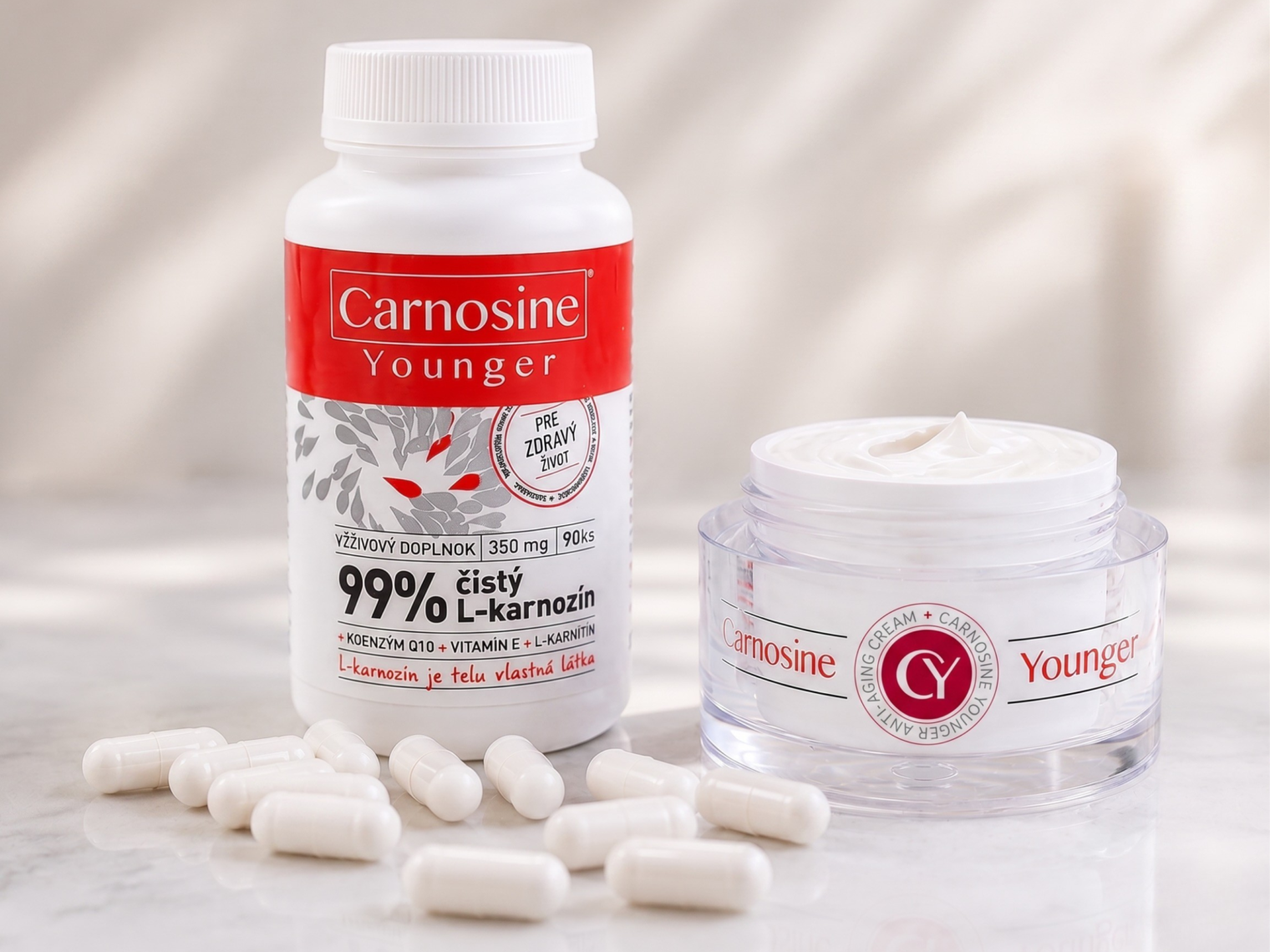
Carnosine
- September 2, 2026
- Cosmetic
In recent years, we have been flooded with hundreds of new products – health food supplements, and one gets the feeling that science has discovered dozens of new substances that have healing effects in just a few years. We all already know what Vitamin C, E, Coenzyme Q 10 are, even many of us, not only connoisseurs of quality red wine, already know the beneficial effects of resveratrol. However, few people know what CARNOSINE is. Scientists call it the substance of the century or the substance of longevity. Carnosine was discovered more than a hundred years ago by the Russian scientist Gulevich.
During surveys in Slovak pharmacies, we found that pharmacists either did not recognize carnosine as a substance or confused it with carnitine.
The importance of carnosine is very underappreciated in our country. In Russia, its use began on a large scale in the 1970s. First, it was in the so-called space medicine, when cosmonauts began to receive large doses of carnosine. Its task was to eliminate the enormous stress that cosmonauts experience during flight and also to keep them in good physical and mental condition.
WHAT IS CARNOSINE?
Carnosine (L-carnosine) is a natural, body-derived substance that is produced mainly in the heart, brain, and muscles.
It is a biologically active dipeptide formed by two amino acids. It belongs to the list of natural protein regulators of metabolism. SESeverin proved that carnosine effectively balances (acts as a buffer), buffers lactic acid in muscles and that the action of carnosine increases muscle contractility and their resistance to fatigue. A working muscle accumulates lactic acid, the pH decreases, which is the main cause of muscle fatigue. When carnosine is administered, the muscle regenerates, almost immediately working as if it were not tired. This process caused by carnosine is known as the “Severin phenomenon”. This predetermined the use of carnosine in another group of people in Russia, which were athletes.
In recent years, scientific interest in this exceptional, completely non-toxic substance has grown significantly, especially after Australian and British discoveries about the effects of carnosine in the aging process.
CELL RENEWAL
It is present in the human body from birth (its highest concentration is in skeletal muscle, brain, cerebellum and heart), but over time its production decreases – this is a process that is technically called senescence. CARNOSINE has a remarkable ability to rejuvenate cells, restore their normal properties and extend their lifespan. It protects cells from telomere shortening and DNA damage during cell division. It is often called a neuropeptide, for its protective effects in the brain. CARNOSINE is a relative novelty as a multifunctional food supplement.
ANTI-AGING EFFECT
Carnosine has many distinctly “rejuvenating” benefits. It has the exceptional ability to rejuvenate old and aging cells and transform them into fully functional, healthy cells.
It extends the time between cell divisions and at the same time increases the number of divisions.
This means that it significantly extends the lifespan of each cell, with the ratio being direct: the more carnosine, the longer the intervals between divisions and the more divisions.
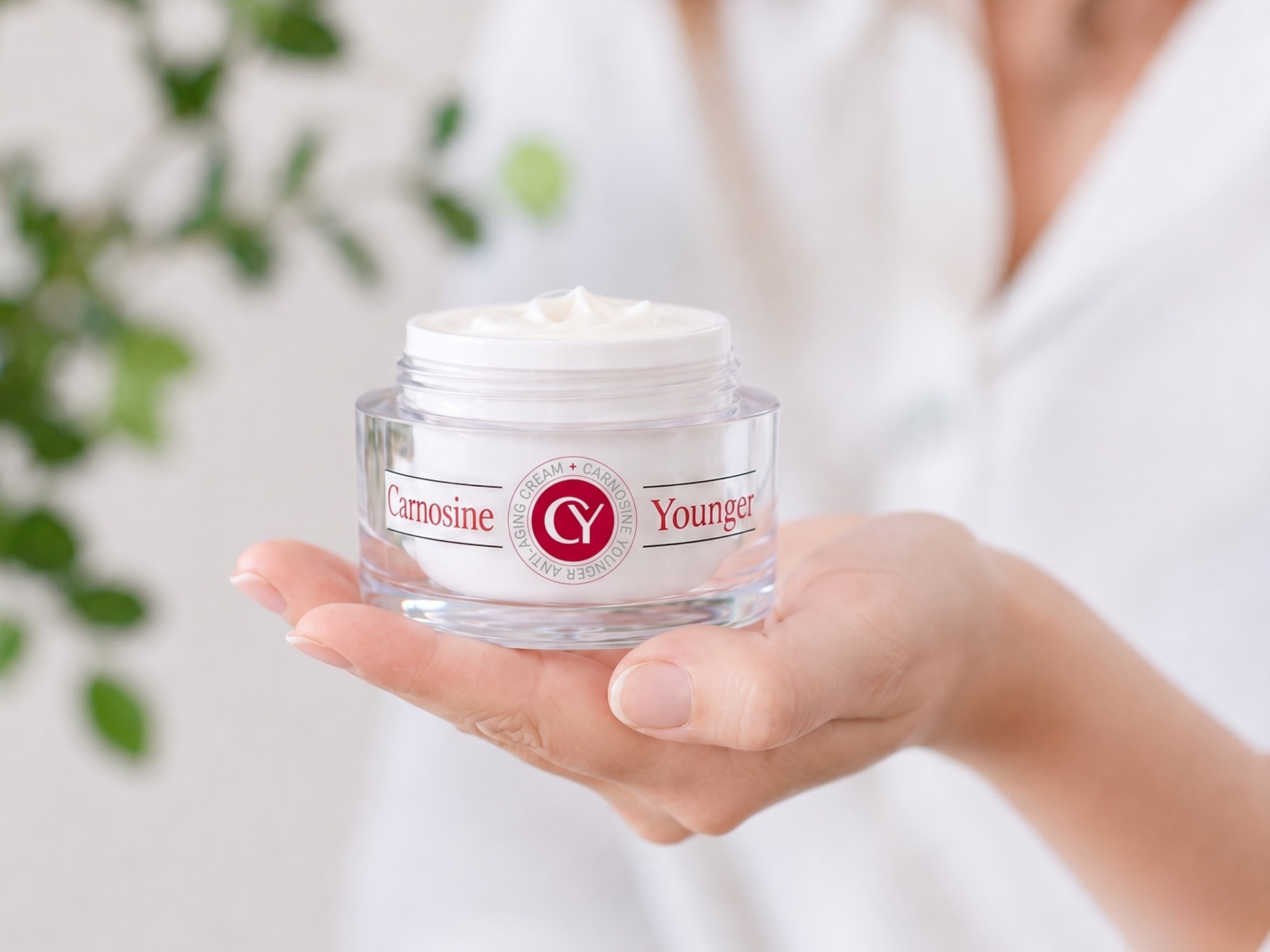
Carnosine Younger Anti-Aging Cream is a nourishing cream containing carnosine. This way you can also supply your skin with carnosine from the outside with a cream that supports cell renewal.
HOW AND WHEN CARNOSINE HELPS Brain and nerve protection
Carnosine is the most intense universal antioxidant that eliminates free radicals.
It is a perfect protector of chromosomes (DNA) from damage by free radicals.
It has anti-inflammatory and antitumor effects.
An aldehyde remover and is capable of eliminating the final harmful waste products of metabolism, such as protein degradation parts (damaged protein chains, sugars and phospholipids) while also acting as a key substance for the formation of new, more resistant structures.
Buffering effect for lactic acid – maintaining pH (=acidity) in muscles during exercise. Supports muscle vitality, increases muscle strength, endurance and athletic performance. Accelerates recovery after sprints, healing of wounds and connective tissue.
Reduces cell damage caused by alcohol.
It acts as a transmitter of impulses in the brain and nerves.
Protects brain proteins and biochemical parameters.
It protects the brain from plaque formation, which is one of the causes of Alzheimer’s disease. It suppresses the formation of beta-amyloid cross-links.
Improves logical thinking skills and memory.
Protects against the toxic effects of heavy metals. It is able to chelate ( see chelating effect below ) – to remove heavy metals such as copper, zinc, iron from the body, but also toxic metals such as arsenic, lead, mercury, cadmium or nickel. Zinc and copper chelates formed by the action of CARNOSIN dissolve plaques on the brain in Alzheimer’s disease.
It prevents the processes of glycation and carbomylation of proteins, but also phospholipids.
It is known for its ability to protect the brain from the ravages of aging, but it can also reverse some of the “repairable” damage caused by aging.
It rejuvenates cultured human cells in senescence.
It has a significantly positive effect on autistic disorders.
It prolongs life span.
It attenuates the toxic effects of hydroxyl, superoxide and peroxyl radicals.
It effectively suppresses lipid peroxidation.
AGEs inhibitor, protects proteins from AGEs damage.
Suppresses protein cross-linking.
It inhibits the processes of damage to healthy proteins by their denatured forms.
CARNOSINE is a completely physiological and 100% natural superantioxidant with an amazing spectrum of biological functions and a proven repertoire of beneficial effects on the body.
CARNOSINE is considered the substance of the century and is expected to become a fundamental daily nutritional supplement for people of all ages, especially those who have reached the age of 33 and older.
CHELATING EFFECT
Carnosine exerts its biological effects – at least in part – also through its ability to chelate metals. What does this mean? The term chelate comes from the Greek: “chele” = “claw”, which expresses the ability of a substance (in this case carnosine) to bind, combine with excess metals in cells and the bloodstream.
Chelates are substances of such a nature that the liver and kidneys are able to eliminate them from the body. Chelation therapy is a traditional classic detoxification treatment used primarily in occupational medicine. Therefore, various chelating drugs are used, such as penicillamine or EDTA (and others) in intravenous administration. This treatment effectively removes heavy metals (e.g. lead) from the body.
In connection with vaccination, the question of taking carnosine may be crucial, because carnosine removes organic mercury compounds (thiomersal or thimerosal) from the child’s body. These organic mercury compounds are part of many vaccines as antimicrobial preservatives, although they have been labeled as toxic substances for the central nervous system since the 1930s. It is therefore appropriate for every vaccinated person, whether a child or an adult, to take carnosine as a precautionary measure in order to remove thiomersal from the body as soon as possible.
However, chelation therapy is also used as a supplement for many other diseases (not only for heavy metal intoxication), as it can bring the following beneficial effects:
dilates constricted blood vessels
reduces high blood pressure
reduces the activity of free radicals
increases oxygen uptake into cells
removes toxic heavy metals from the body
improves memory
eliminates pain in the limbs
increases the elasticity of blood vessels
increases blood supply to the heart, brain, organs and limbs
increases enzymatic activity
MUSCLES AND SPORTS
Performance improvement
From the age of 20 to 70, the body’s muscle mass decreases by 20%, as does muscle strength and endurance, so the overall reduction in muscle efficiency is higher than 20% and approaching 40%. The concentration of carnosine and its antioxidant effect during this period drops to approximately half of their original values.
The decrease in carnosine concentration with age leads to a decrease in muscle strength and endurance. So, carnosine supplementation leads to an increase in its concentration and thus to the restoration and increase of strength, endurance, endurance and acceleration of regeneration.
Active, strong, so-called fast muscle fibers contain a large amount of carnosine, while weak and atrophic ones contain significantly less carnosine. The Russian scientist Severin demonstrated as early as the 1950s that adding carnosine to the fluid in which isolated exhausted muscles were incubated caused an almost immediate restoration of full muscle energy. Dr. MacFarlane’s Australian team demonstrated that adding carnosine increases the strength and endurance of tired muscles. Interestingly, carnosine supplementation is directly proportional to the resulting effects on the muscles: the more carnosine is added, the higher its content in the muscles and the higher the muscle strength and endurance.
Muscle relaxation and functionality
Russian scientist ES Severin proved in 1953 that carnosine effectively balances (acts as a buffer), buffers lactic acid in muscles and that the action of carnosine increases muscle contractility and their resistance to fatigue. A working muscle accumulates lactic acid, the pH drops, which is the main cause of muscle fatigue. When carnosine is administered, the muscle regenerates, almost immediately working as if it were not tired. This process caused by carnosine is known as the “Severin phenomenon”. This in Russia predetermined the use of carnosine in another group of people, which are athletes.
Carnosine also helps the function of the so-called calcium pump in the sacroplasmic reticulum of muscle cells and keeps calcium channels open. In the absence of carnosine, the pump stops working, calcium channels close due to increased acidity, increased lipid peroxidation and accumulation of malondialdehyde (MDA). Carnosine prevents the development of these harmful reactions and is an ideal physiological supplement in sports.
Muscle protection and regeneration
In sports, carnosine also participates in the detoxification of reactive aldehydes, formed by lipid peroxidation during muscle work. Thus, carnosine protects muscles from damage, increases their strength, endurance, resistance and accelerates regeneration processes, which has been confirmed by a demonstrable number of studies.
Carnosine is not a doping substance, it is a completely non-toxic and natural substance of the body.
POWERFUL ANTIOXIDANT
Carnosine is an antioxidant that stabilizes and protects cell membranes. Specifically, as a water-soluble antioxidant, it prevents lipid peroxidation within the cell (bilayer) membrane.
Many antioxidants (such as vitamins C and E) protect tissues before they enter the tissues, but they have little effect when this first line of defense is broken. Free radicals then cause so-called oxidative stress in the body. Carnosine reacts generally with all reactive oxygen species (ROS = free oxygen radicals) and thus prevents the development of oxidative stress.
However, carnosine does not only act preventively – it is also active when dangerous compounds, such as lipid peroxides and their secondary products, have already been formed by free radicals, thus protecting tissues from the harmful effects of these “second wave” substances.
For example, the highly reactive end product of lipid peroxidation, malondialdehyde (MDA), a dangerous product of free-radical reactions, is blocked by carnosine. MDA, when not neutralized, can cause damage to lipids, enzymes, and DNA, and plays a significant role in the development of atherosclerosis, inflammatory and degenerative joint processes, the development of cataracts, and aging processes in general. Carnosine, by reacting with and inactivating MDA, is itself sacrificed in favor of protecting amino acids in molecules.